Parking on the NSW driving test
Parking is the part of the test with numbers attached. Learn the numbers, practise until they stop being numbers, and the manoeuvres stop being the thing you worry about.
On the NSW Driving Test, the testing officer asks for a number of manoeuvres chosen from a short list: a kerbside stop, a hill start, a three-point turn, and parking, which may be a reverse parallel park, a 90-degree park or a 45-degree park, front or rear to the kerb, depending on what the area has.
The standards below come from Transport for NSW's A Guide to the Driving Test (PDF). Where it and the current NSW Driving Test page differ, the current page wins.
The road rules
How you must park in NSW, test or no test
The everyday rules are simpler than the test standards. Parallel parking is the usual way to park unless a sign says otherwise: in the same direction as traffic, parallel and as close as possible to the kerb, within any line markings, and at least 1m from any parked vehicle in front or behind. On a one-way street you can also park on the right.
Angle parking is allowed where signs or markings show it. Unless they say otherwise, you park at a 45-degree angle with the front of the car to the kerb. The NSW Government parking safety page sets this out with diagrams.
The test standard
What the testing officer measures when you park
The numbers
- Kerb distance. Parallel to the kerb and closer than 500mm. A final position more than 1m from the kerb, or one that obstructs traffic, is a fail.
- Gap to other cars. At least 1m from other vehicles, and no more than 2m from them.
- Reversing distance. Reverse only as far as you need. Reversing more than 7m back from the vehicle you are parking behind is a fail.
- Marked bays. Finish as close as practical to the bay's angle and inside the lines. Wheels on or over marked lines is a fail.
- Direction changes. A maximum of four for any parking manoeuvre.
- The kerb itself. Mounting the kerb at any time during the test is a fail.
Turning around
The three-point turn and the kerbside stop
The three-point turn allows a maximum of five direction changes, but if the road is wide enough to do it in three, three is what is expected. Check left and right for traffic before every movement, not just the first.
Observation is assessed through all of it. Turn your head and check the blind spot before you move to the kerb to start a manoeuvre, before you leave the kerb to rejoin traffic, and before you steer if reversing will swing the front of the car into the lane.
Practice
How to practise parking so it holds up on the day
Practise in a quiet street first, with plenty of space, until the reference points are automatic: where the kerb appears in the mirror when you are close enough, and where the car behind sits in the rear window when you have reversed far enough. Then shrink the space. Then add traffic.
Count your direction changes out loud during practice. Most learners who fail on parking do not fail on the kerb; they fail by correcting too many times, because each correction felt small.
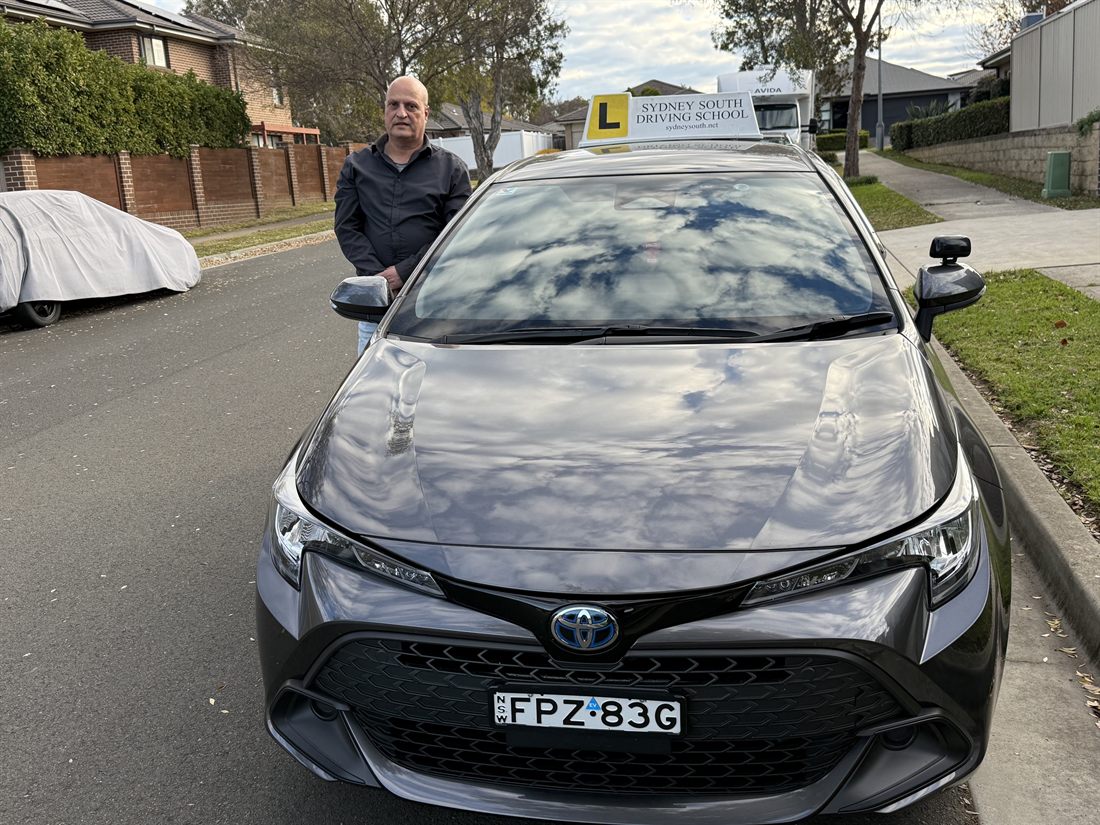
George Hany · Senior Driving Instructor
Lessons around Camden and the Macarthur region are taught by George, an instructor since 2005 who came to it after years of teaching at TAFE NSW and in high schools. He holds a Graduate Diploma in Education from ACU, a Masters of Building Science from Victoria University of Wellington, and a Bachelor of Town Planning.
For Camden learners. Older town centres are where parking gets real. One local school says its Camden driving lessons use the town-centre streets and car parks for low-speed precision and parking practice. Compare providers and confirm the details directly.
Questions
What learners ask
-
How close to the kerb do I need to park on the NSW driving test?
Closer than 500mm, and parallel to it. A final position more than 1m from the kerb, or one that obstructs traffic, is a fail.
-
How many direction changes are allowed when parking?
A maximum of four for any parking manoeuvre. The three-point turn allows up to five, but three is expected where the road is wide enough.
-
How far can I reverse during a reverse parallel park?
Reverse only as far as you need. Reversing more than 7m back from the vehicle you are parking behind is a fail.
-
Does touching the kerb fail the test?
Mounting the kerb at any time during the test is a fail. Park parallel and close to the kerb without riding up onto it.
-
Which parking manoeuvre will I be asked to do?
It depends on what the area around the centre has: a reverse parallel park, a 90-degree park or a 45-degree park, front or rear to the kerb.
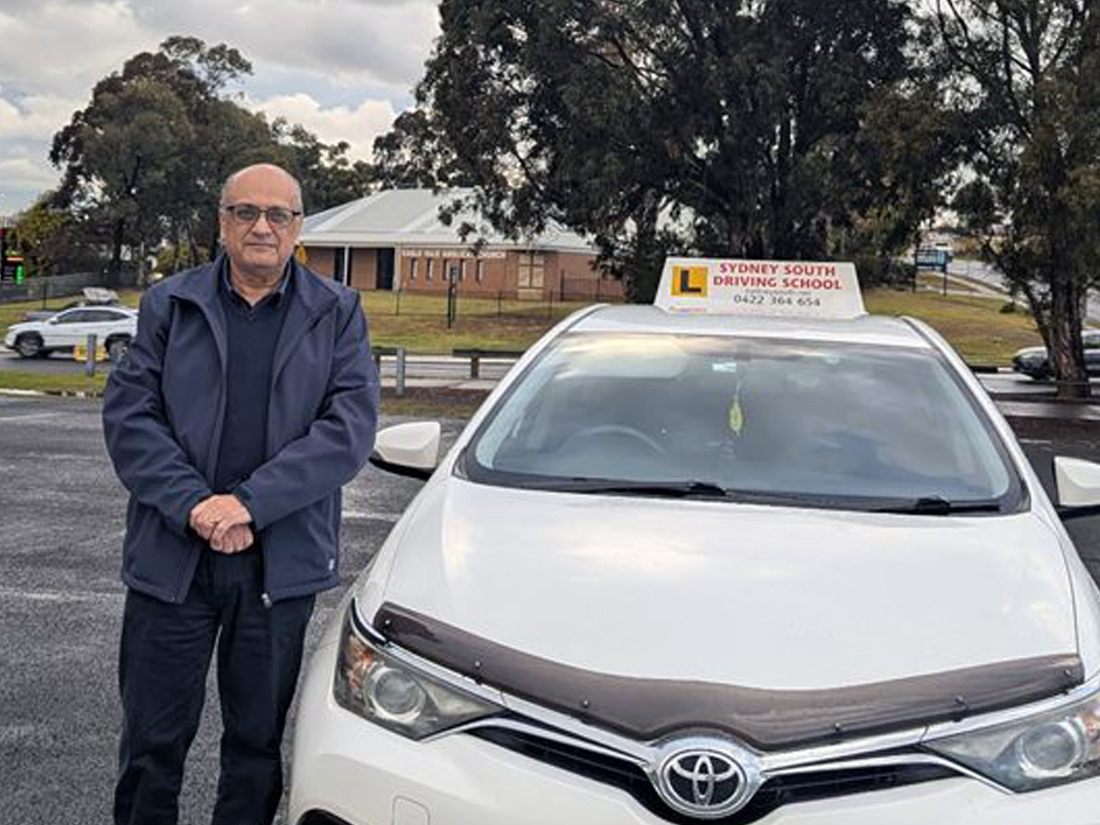
Senior driving instructor at Sydney South Driving School since 2013, with a Bachelor of Commerce and a professional background in accounting and five-star hospitality. More about Ashraf